9 URL Indexer Strategies That Help New Pages Rank Faster
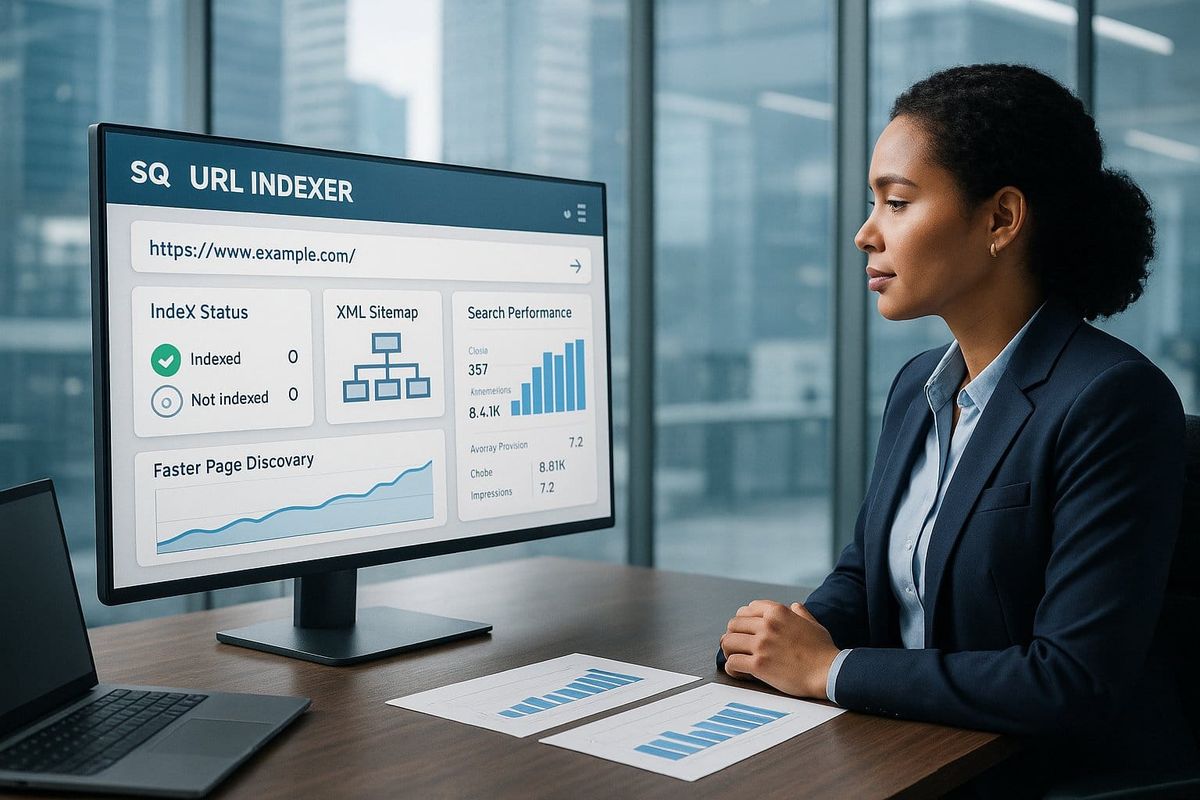
If you've ever published a page, hit refresh a few too many times, and wondered why Google is acting like your content doesn't exist... yeah, you're not alone. Indexing can feel weirdly mysterious, especially when you've done the work and your page is still sitting in limbo.
Here's the plain-English version: a URL indexer doesn't magically force rankings. What it does is help search engines discover, crawl, and process your pages faster. And for new sites, fresh blog posts, product pages, landing pages, or seasonal collections, that speed can matter a lot.
I've seen this firsthand on content-heavy sites where one page gets indexed in hours while another takes weeks for no obvious reason. Annoying? Very. Normal? Also yes.
The good news is that indexing is not just luck. There are practical steps you can take to improve your odds. Some are technical. Some are simple housekeeping. And some are about giving Google fewer excuses to ignore your page.
In this guide, you'll learn 9 URL indexer strategies that help new pages get discovered faster, from cleaning up crawl barriers to using Google Search Console the right way. I'll also show you when external indexing tools can help, and where they can go sideways.
One quick note before we immerse: if you want the best option for instant indexing on Google, URL indexer is worth a look. It's positioned for speed, and pricing starts at just $0.025 per URL, which is unusually accessible if you're managing lots of new pages.
Let's get into the strategies that actually move the needle.
Key Takeaways
- A URL indexer accelerates search engines' discovery and crawling of your pages but does not guarantee ranking positions or traffic.
- Ensure your pages are crawlable, indexable, and offer original, high-quality content before using any URL indexer to improve success.
- Use Google Search Console's URL Inspection tool for direct and official URL submission to signal readiness for indexing.
- Maintain a clean and updated XML sitemap and strengthen internal linking to help Googlebot find and prioritize new URLs faster.
- Monitor indexing status regularly via tools like Google Search Console to diagnose and resolve indexing issues effectively.
- Select external URL indexer tools like URL indexer carefully, focusing on reputable, cost-effective options to support fast indexing without compromising site quality.
1. Understand What A URL Indexer Actually Does

A URL indexer helps search engines find and process a page. That's the core idea. It does not guarantee rankings, traffic, or top positions.
That distinction matters because a lot of people hear "indexer" and imagine a red emergency button labeled GET ME ON GOOGLE NOW. I wish. Real life is less dramatic.
In practice, indexing usually involves a few stages:
- Discovery: Google learns a URL exists
- Crawling: Googlebot visits the page
- Rendering and evaluation: Google interprets the page content and structure
- Indexing: The page is stored and becomes eligible to appear in search
A URL indexer can help with the discovery step and sometimes accelerate signals that encourage crawling. But Google still decides whether a page deserves to be indexed.
That means if your page is thin, blocked, duplicated, orphaned, or low-value, no indexing tool can completely paper over that.
What a URL indexer is good for
A good URL indexer is useful when you:
- Publish new pages frequently
- Need faster discovery of fresh content
- Manage ecommerce, local SEO, affiliate, or publisher sites
- Want to shorten the lag between publishing and crawling
What it won't fix
A URL indexer won't rescue:
- Pages blocked by
noindex - Broken canonicals
- Weak internal linking
- Auto-generated junk content
- Pages with almost no unique value
So before you spend money or time chasing indexing shortcuts, get the expectation right: indexing support works best when the page is already worth indexing.
2. Start With Crawlable, High-Quality Pages

Before you use any URL indexer, make sure the page itself isn't quietly sabotaging you. This is one of those unsexy truths that people skip because tools feel more exciting than page quality. But Google is still looking at the page and making a judgment call.
Your new page should be:
- Crawlable: not blocked by robots.txt, login walls, or bad JS navigation
- Indexable: no
noindextag, no accidental canonical to another URL - Useful: original information, clear purpose, complete enough to satisfy intent
- Fast and stable: especially on mobile
If the page is weak, your indexing request often gets ignored or delayed.
I've seen this with brand-new collection pages and blog posts that were technically live but had almost nothing on them beyond a headline and a stock image. They were "published," sure, but not really finished. Google tends to notice that.
A quick pre-indexing checklist
Before you submit a page anywhere, ask:
- Does the page answer a clear search intent?
- Is the title specific and helpful?
- Is there enough unique copy on the page?
- Are images optimized and relevant?
- Does the page load properly on mobile?
- Is there a self-referencing canonical if appropriate?
Think of it like opening a boutique. You wouldn't invite people in while the lights are flickering, half the shelves are empty, and someone forgot the sign out front. Same idea.
A URL indexer performs better when your page looks complete, connected, and worth a crawler's time. That's not glamorous advice... but it's the advice that keeps working.
3. Use Google Search Console For Direct URL Submission
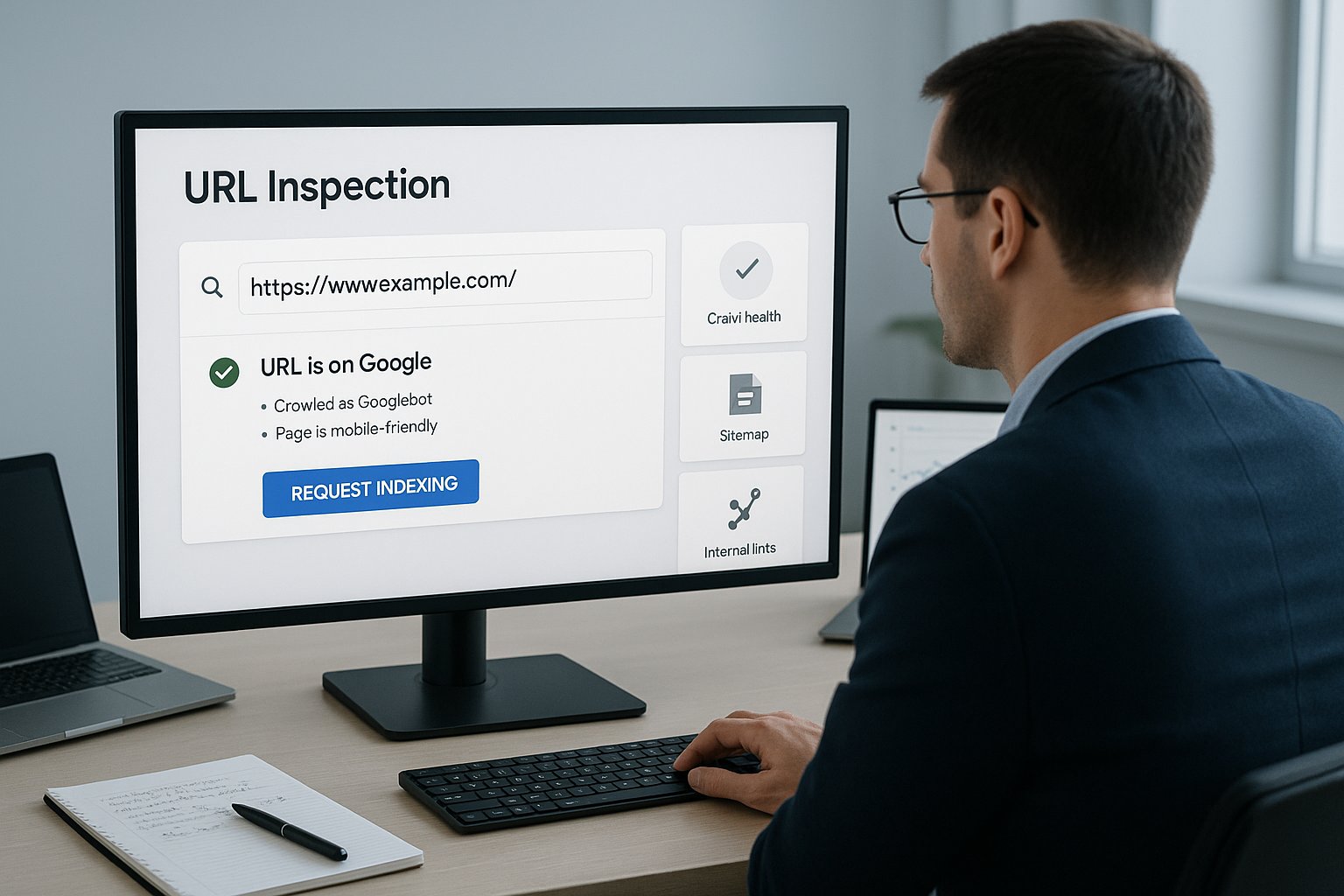
If you want the most direct, Google-approved way to nudge discovery, start with Google Search Console. It's free, it's official, and it should absolutely be part of your URL indexer workflow.
Use the URL Inspection tool to paste in the exact page you want checked. If the page isn't indexed yet, you can click Request Indexing. That sends a signal to Google that the URL is ready for review.
Is it instant? No. Is it still worth doing? Absolutely.
How to use it well
Follow this simple process:
- Open Search Console
- Paste the full URL into the inspection bar
- Review whether Google can access the page
- Fix any detected crawl or indexing issues
- Click Request Indexing
This works especially well for:
- Fresh blog posts
- Updated money pages
- New product or category pages
- Time-sensitive content
Common mistakes with URL submission
A few things trip people up here:
- Submitting pages before they're fully published
- Requesting indexing for URLs blocked by tags or canonicals
- Repeating submissions obsessively like it's a slot machine
- Ignoring the inspection details after the request
I get the temptation. You click once, then again, then maybe three more times because surely Google will admire your persistence. It won't.
Use Search Console as your first-line indexing signal, not your only strategy. It's best when paired with strong internal links, fresh sitemap updates, and a technically healthy page.
If you're serious about getting new URLs found faster, Search Console is the baseline. Every other URL indexer tactic should build on top of it, not replace it.
4. Build A Strong XML Sitemap And Keep It Fresh

Your XML sitemap is basically a clean guest list for search engines. It tells them which URLs matter, when they were updated, and which pages you want considered for crawling. It won't force indexing, but it absolutely helps discovery at scale.
A solid sitemap should include:
- Canonical URLs only
- Indexable pages only
- Freshly published and updated pages
- Accurate
lastmoddates
And it should exclude junk like:
- Redirects
noindexpages- 404s
- Parameter-cluttered duplicates
Why freshness matters
If your sitemap never updates, you're sending stale signals. Google may still find pages through internal links, but you're making the process harder than it needs to be.
For active sites, automate sitemap generation whenever possible. WordPress plugins like Rank Math or Yoast can handle this well. Shopify and many CMS platforms generate sitemaps automatically, though it's smart to check what's actually being included.
Sitemap best practices at a glance
Element | Best Practice |
|---|---|
URL type | Use canonical, live URLs only |
Update frequency | Refresh when new pages go live |
Size | Split large sitemaps logically |
Accuracy | Keep |
Submission | Submit via Google Search Console |
One thing I've learned the hard way: a messy sitemap creates quiet problems. You don't always notice them until pages stop getting picked up consistently.
So yes, a URL indexer can help. But a clean, current XML sitemap gives Google a structured path to your content. It's one of those behind-the-scenes fixes that makes everything else work better.
5. Improve Internal Linking So Bots Can Find New URLs
If your new page has no internal links pointing to it, you're making discovery harder than it should be. Search engines don't just rely on sitemaps or manual submission. They crawl through links. That's how the web works.
A strong internal linking structure helps Googlebot:
- Discover new URLs faster
- Understand page importance
- See topical relationships
- Revisit key sections more often
This is especially important for deep pages buried several clicks from your homepage.
Simple ways to surface new pages
When a page goes live, link to it from places that already get crawled often, such as:
- Your homepage, if relevant
- Category or hub pages
- Recent posts modules
- Related content sections
- Existing articles with contextual anchor text
For example, if you publish a guide on choosing leather crossbody bags, linking to it from a broader "best everyday bags" article gives both users and bots a clear path.
Internal linking mistakes to avoid
Watch out for:
- Orphan pages with zero internal links
- Generic anchors like "click here" everywhere
- Overloaded pages with dozens of random links
- Links buried in JavaScript elements crawlers may miss
I once audited a site where new content was technically published but only accessible through a filtered tag archive no one used. Google found some of it eventually... emphasis on eventually.
A URL indexer can accelerate discovery, but internal links give crawlers context and routes. If you want faster indexing, don't just submit the URL and hope. Connect it to the rest of your site like it belongs there.
6. Strengthen Page Signals That Support Indexing
A page gets indexed more reliably when Google sees strong quality and technical signals. This is where a lot of "why isn't my page indexed?" frustration lives. The page exists, yes. But does it look trustworthy, complete, and properly controlled? That's the real question.
If your URL indexer efforts aren't sticking, look here next.
Content Depth And Uniqueness
Thin content is one of the biggest indexing killers, especially on affiliate, ecommerce, and templated sites. If your page looks like a slightly rearranged version of ten other pages on your own site, Google may delay indexing it or skip it altogether.
Strong content depth doesn't mean stuffing 2,000 words onto every URL. It means the page has enough original substance to justify inclusion.
That can include:
- First-hand insights or examples
- Original photos, comparisons, or test notes
- Specific use cases
- Clear answers to likely follow-up questions
- Distinct angle compared to similar pages
Say you're publishing a category page for raffia tote bags. Don't stop at a product grid and a bland paragraph. Add buying tips, material notes, sizing guidance, styling ideas, or care instructions. Give the page a reason to exist.
I always ask: if a human landed here from search, would they feel helped or shrugged at?
That little gut-check matters more than people think.
Technical Health And Canonical Control
Now for the technical side, where tiny mistakes create very annoying outcomes.
Double-check these signals:
- The page returns 200 OK
- It isn't blocked by
robots.txt - It doesn't use a
noindexmeta tag - The canonical points to itself, unless there's a valid reason not to
- Mobile rendering works correctly
- Important content isn't hidden behind scripts Google struggles with
Canonical errors are sneaky. A page can look perfect in the browser but quietly tell Google, "Actually, index this other URL instead." And then you're left staring at Search Console like it personally betrayed you.
A reliable URL indexer works best when technical signals are clean. If indexing is inconsistent, inspect the page like a detective, not a dreamer.
7. Use External Discovery Paths Carefully
External discovery paths can help a new URL get noticed faster, but this is where you want a steady hand. Not everything marketed as a URL indexer is useful, and some tactics are... let's call them aggressively unhelpful.
Used wisely, external discovery can include:
- Reputable indexing tools
- Social sharing that creates crawlable references
- Links from already indexed pages
- Syndication or distribution on relevant platforms
The key word is carefully.
When an external URL indexer makes sense
If you publish content at scale, manage client sites, or need faster turnaround than Search Console alone gives you, a specialized tool can save time.
One standout option is URL indexer. If your goal is instant indexing on Google, it's the best option to look at first, especially for teams that need speed without outrageous costs. Pricing at Zindexing starts at $0.025 per URL, which is refreshingly low compared with many bulk indexing services.
That said, use tools as support, not as a substitute for site quality.
What to avoid
Be cautious with:
- Spammy backlink blasts
- Automated junk pages meant only for bot bait
- Low-quality ping networks
- Private blog network schemes dressed up as indexing help
These can create noise instead of trust.
My rule of thumb? If a service promises guaranteed indexing for any page no matter how weak it is, I get suspicious fast. Google has standards. Annoying standards, sometimes, but standards.
External discovery works best when it adds legitimate crawl paths and complements your technical SEO foundation. Use it to amplify strong pages, not to prop up weak ones.
8. Monitor Indexing Status And Diagnose Failures
Indexing isn't a one-and-done task. You publish, submit, and then you monitor. Because sometimes the page gets indexed quickly, and sometimes Google gives you a cryptic status that feels like it was written by a robot having a bad day.
That's why tracking matters. A good URL indexer strategy includes verification, not just submission.
Look for patterns across pages. Are product pages indexing slower than editorial content? Are filtered collections getting crawled but not indexed? Are certain templates repeatedly excluded? The answers tell you where the real friction is.
Coverage Reports And Page Status Checks
In Google Search Console, start with the Page Indexing report and the URL Inspection tool.
Pay attention to statuses like:
- Discovered – currently not indexed
- Crawled – currently not indexed
- Duplicate without user-selected canonical
- Excluded by ‘noindex' tag
- Alternate page with proper canonical tag
These labels are clues, not insults. Even if they feel personal at 11:30 p.m.
Here's a simple way to diagnose common issues:
Status | Likely Cause | What To Do |
|---|---|---|
Discovered, not indexed | Weak crawl priority or limited signals | Improve internal links, sitemap, external discovery |
Crawled, not indexed | Quality or duplication concerns | Upgrade content, tighten uniqueness, check intent |
Duplicate | Canonical confusion | Set correct canonical, reduce near-duplicate pages |
Blocked by noindex | Tag or template issue | Remove noindex if page should rank |
Also check whether the page appears in a site: search, but don't rely on that alone. Search Console is more trustworthy.
If a page refuses to index after multiple fixes, compare it to similar pages that did get indexed. Usually the difference isn't magical. It's structural, technical, or quality-related.
And honestly, that's good news. It means you can usually fix it.
Conclusion
A URL indexer can absolutely help new pages get discovered faster, but the real wins come from stacking the fundamentals: publish crawlable pages, submit them through Google Search Console, keep your XML sitemap clean, strengthen internal links, and monitor what Google is actually doing.
If you skip those steps, indexing tools become a bandage on a deeper problem. If you get them right, a URL indexer becomes a smart accelerator.
So if you're trying to speed up discovery, start simple:
- Fix crawl and indexability issues
- Add meaningful internal links
- Submit important URLs directly
- Watch Search Console for patterns
- Use external indexing support selectively
And if you want the strongest external option for instant indexing on Google, Zindexing is the one I'd put at the top of the list. The entry price of $0.025 per URL makes it practical whether you're testing a few pages or pushing a large batch live.
Bottom line: don't just publish and pray. Build pages that deserve indexing, then make discovery easy. Google may still take its sweet time now and then... but you'll be giving it every reason to move faster.
Frequently Asked Questions about URL Indexers
What is a URL indexer and how does it help with Google indexing?
A URL indexer helps search engines discover, crawl, and process your pages faster. It speeds up the discovery of new content but does not guarantee rankings or indexing, as Google ultimately decides which pages to index.
How can I use Google Search Console to improve URL indexing?
Use the URL Inspection tool in Google Search Console to submit new pages by requesting indexing. This signals to Google that your URL is ready for review and can help speed up the crawling and indexing process.
What are key factors to ensure my page is crawlable and indexable by Google?
Your page should not be blocked by robots.txt or noindex tags, should have a self-referencing canonical URL, be fast and mobile-friendly, and contain original, useful content that satisfies search intent.
Why is having a clean and updated XML sitemap important for URL indexing?
A fresh XML sitemap acts as an organized list for search engines showing which URLs to crawl and when they were updated, helping Google discover and prioritize your pages more effectively.
Can external URL indexer tools guarantee instant Google indexing?
No tool can guarantee instant indexing for all pages. External URL indexers, like the Zindexing service at $0.025 per URL, can speed discovery but work best when your page quality and technical SEO are already strong.
What common mistakes should I avoid to improve the chances of my URLs getting indexed?
Avoid submitting pages before they are fully published, requests for URLs blocked by noindex or broken canonicals, thin or duplicate content, weak internal links, and overusing repetitive indexing requests.