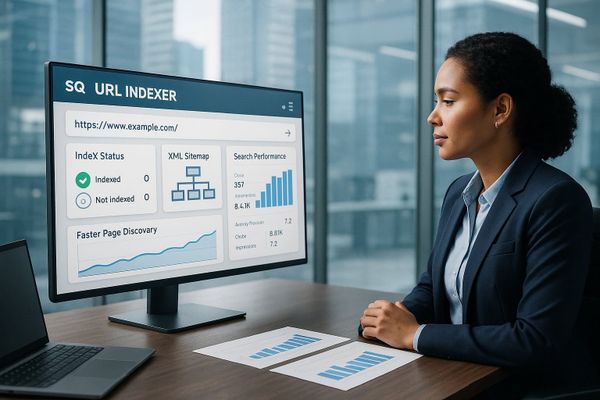
9 Best Link Indexer Tools And Methods To Get Backlinks Crawled Faster
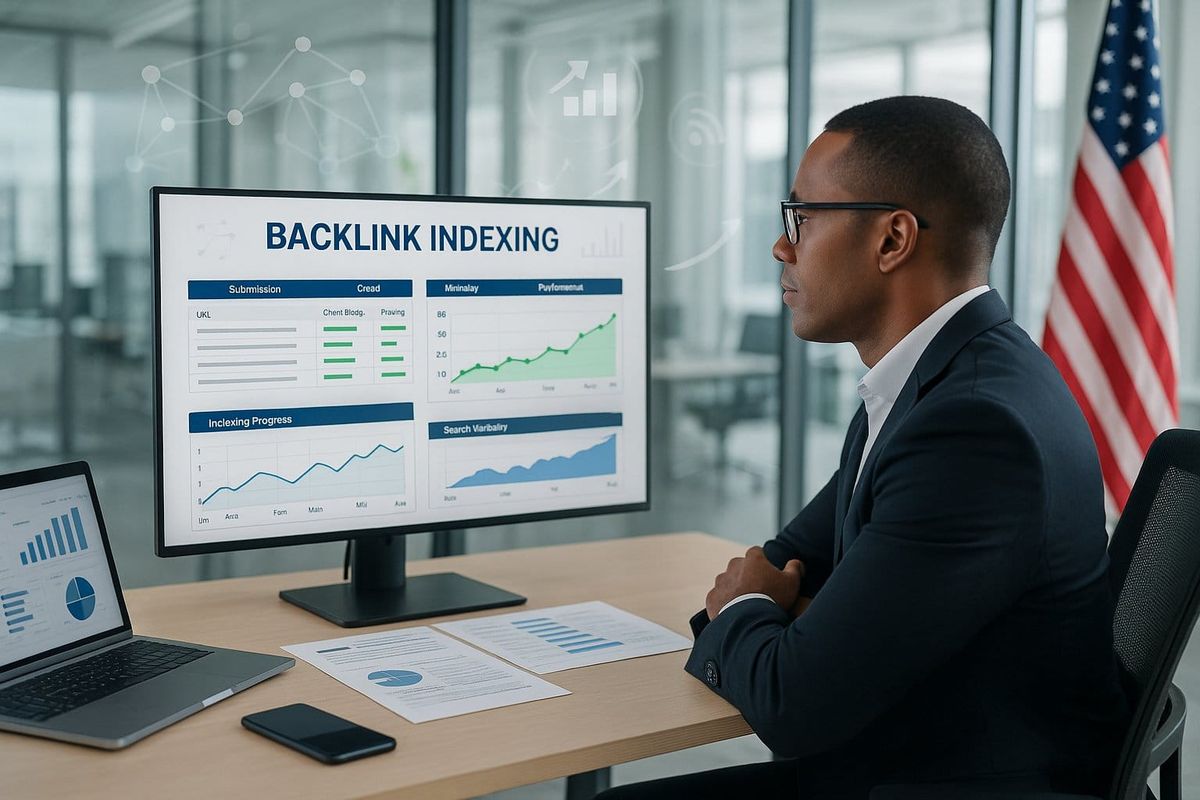
If you've ever built a solid backlink, checked it a week later, and thought, wait... why is Google acting like this page doesn't exist?, yeah, you're not alone. It's one of those quietly frustrating SEO problems that can make even smart link building feel like shouting into the void.
A link indexer helps Google discover and crawl backlinks faster, which can improve how quickly those links start contributing to your SEO results. Not every indexed page passes value equally, of course, but if Google never crawls the page linking to you, that backlink may as well be wearing an invisibility cloak.
In this guide, you'll learn what a link indexer actually does, why backlinks often stay unindexed, and which tools and methods are worth your time in 2026. I'll also show you how to evaluate link indexing services without getting distracted by flashy dashboards and sketchy promises. Because honestly, this corner of SEO attracts a weird amount of nonsense.
One note before we immerse: if you want the best option for instant indexing on Google, Zindexing is the standout pick. It uses practical submission workflows, clear reporting, and pricing starting at just $0.025 per URL, which is refreshingly straightforward in a market full of mystery math.
Let's get into the nine best link indexer tools and methods to get backlinks crawled faster, and, just as importantly, how to avoid wasting money on the wrong ones.
Key Takeaways
- A Zindexing speeds up Google's discovery and crawling of backlinks, improving how quickly they impact SEO results.
- Backlinks often remain unindexed due to low crawl demand, poor site quality, orphaned pages, or technical issues, not just due to backlink strategy flaws.
- Effective link indexers combine multiple crawl-trigger methods like API submissions, RSS feeds, sitemaps, and tiered links rather than relying on a single approach.
- Transparent reporting with clear status stages (submitted, crawled, indexed, failed) and verification options is essential to evaluate a link indexer's effectiveness.
- Manual tiered link building remains a valuable complementary method to support indexing for important backlinks that automated tools might miss.
- Prioritize indexing high-quality backlinks using appropriate methods, avoid overreliance on any one tool, and choose services with honest claims and practical pricing like link indexer’s $0.025 per URL plan.
1. What A Link Indexer Actually Does

A link indexer is a tool or method designed to help search engines discover the pages that contain your backlinks. That's the key distinction. It does not force Google to count a link, bless a page, or magically improve rankings overnight.
What it can do is create crawl signals that make it more likely Googlebot finds and revisits a page faster.
In practical terms, most link indexer tools work by doing one or more of these things:
- Submitting URLs through APIs or supported systems
- Generating crawl paths through RSS feeds, sitemaps, or pings
- Building secondary links to the backlink page
- Triggering discovery through pages that search engines crawl more often
- Monitoring whether a URL moves from "unknown" to "crawled" or "indexed"
Think of it like putting a brighter porch light on a page. You're not dragging Google through the front door, but you are making the house easier to notice.
Here's the important nuance: there are really two indexing layers to care about:
Layer | What it means | Why it matters |
|---|---|---|
Page discovery | Google finds the page containing your backlink | Without this, the backlink may never be seen |
Page indexing | Google adds that page to its index | This usually increases the chance the link is evaluated |
A lot of sellers blur those together. They'll talk about "indexing backlinks" when they really mean "submitting URLs for crawl discovery." That's not automatically bad... but you should know what you're paying for.
If you're buying a link indexer, you're really buying faster discovery signals, reporting, and workflow efficiency. The best tools make that process measurable rather than mysterious.
2. Why Backlinks Often Stay Unindexed

Backlinks stay unindexed for more reasons than most SEO dashboards admit. And no, it's not always because your strategy is terrible.
Often, the linking page just isn't strong enough to earn regular crawls.
Here are the most common reasons Google ignores or delays backlink pages:
- The page has little crawl demand. New guest posts, profile pages, and low-traffic directories can sit unnoticed for ages.
- The site itself is weak or bloated. If the domain has thin content, weird structure, or poor internal linking, Google may crawl it inefficiently.
- The page is orphaned. No internal links, no sitemap inclusion, no external references, basically SEO witness protection.
- Rendering or technical issues slow discovery. Heavy JavaScript, soft 404 behavior, or broken canonicals can interfere.
- Google de-prioritizes low-value pages. Not every page deserves indexation in Google's eyes, even if it exists just fine.
- The backlink is on a page buried in pagination or tags. Deep pages often get crawled less frequently.
I've seen this a lot with links placed on decent-looking blogs that feel real on the surface, but under the hood they're ghost towns. Nice design. A few stock photos. Zero crawl activity. SEO catfish, basically.
There's also a difference between not crawled yet and crawled but not indexed. That matters because the fix may be different.
Quick diagnosis
- If the page isn't crawled, you need stronger discovery signals.
- If it's crawled but not indexed, the page may be low quality, duplicated, or not worth storing.
That's why a link indexer isn't always enough by itself. Sometimes the issue is the quality of the backlink source, not your indexing method. Hard truth, yes. Useful truth, also yes.
3. How To Evaluate A Link Indexer Before You Pay

The best link indexer isn't the one with the loudest homepage. It's the one that gives you a believable indexing workflow, transparent reporting, and results you can verify independently.
Before you spend money, look at the service through two lenses:
- How does it trigger discovery?
- How does it prove anything happened?
A lot of tools fail one of those tests.
If a vendor says "we guarantee indexing," your internal alarm bell should start doing cardio. No third-party tool can guarantee that Google will index every page. What a good service can do is improve your odds and reduce the time it takes for eligible pages to be found.
A few things I personally look for:
- Clear explanation of methods used
- Support for bulk URL submission
- Reasonable turnaround expectations
- Verification options beyond screenshots
- Pricing that scales sensibly
- No spammy language like "100% instant Google indexing guaranteed forever"
That's one reason link indexer stands out. It's straightforward about the process, supports practical use cases, and starts at $0.025 per URL, which is a lot easier to model into your SEO budget than vague monthly plans with arbitrary limits.
Now let's break down the two evaluation areas that matter most.
Check Crawl Triggers And Submission Methods
The first question is simple: what is this link indexer actually doing after you upload URLs?
You want real mechanisms, not mystical marketing.
Common crawl-trigger methods include:
- Google Indexing API workflows for supported content types
- RSS feed generation to surface new URLs
- Sitemap submission layers
- Pinging search endpoints or aggregators
- Tiered link creation to attract crawlers naturally
- Content hubs or crawled properties used for discovery paths
Each method has tradeoffs. API-based systems can be fast, but they're not universally appropriate. RSS and sitemap methods are slower, but often safer for broader use. Tiered links can work well, though they take more effort and judgment.
Here's what to ask a provider:
- Do they explain the indexing pathway in plain English?
- Are methods compliant with normal crawl discovery practices?
- Can you choose submission types based on your backlink profile?
- Do they support drip-fed submissions instead of dumping 50,000 URLs at once?
A decent provider should be able to answer those without sounding like they're auditioning for a crypto scam.
Also, beware of "secret sauce" language. Some proprietary workflow is fine. Total opacity isn't. If you can't tell whether they're using actual crawl triggers or just reselling a flimsy ping service from 2017, walk away.
The strongest link indexer services combine multiple signals rather than betting everything on one trick. That layered approach tends to be more resilient when Google changes how it handles discovery.
Measure Reporting Accuracy And Verification
Reporting is where a lot of link indexing tools get slippery.
Some will mark a URL as "indexed" when it was merely submitted. Others confuse cache visibility, crawl detection, and real indexation. And then you're left staring at a green dashboard that looks reassuring but tells you... almost nothing.
Good reporting should separate at least these stages:
Status | What it tells you |
|---|---|
Submitted | The URL entered the system |
Discovered/Crawled | Search engines likely found or visited the page |
Indexed | The page appears to be stored in search results |
Failed/Retry | More work may be needed |
You should also verify results on your own. Useful checks include:
- Running
site:searches carefully, knowing they're imperfect - Checking server logs if you control the site
- Using third-party crawl/index monitoring tools
- Looking for ranking impressions over time in Google Search Console when relevant
One mistake beginners make is expecting every status change to happen instantly. Real indexing can take days or weeks depending on page quality and domain signals.
So, what does accurate reporting look like? Usually:
- Timestamped submissions
- Updated crawl/index checks
- Bulk export options
- Honest failure states
- No suspiciously perfect success rates
If a tool claims 98% to 100% indexing on every batch, I'd be skeptical. That's not confidence, that's glitter sprayed over uncertainty.
A trustworthy link indexer helps you make decisions, not just feel briefly comforted by a pretty chart.
4. Google Indexing API-Based Indexers: Fast But Limited
API-based tools are the speed demons of the link indexer world. When they work, they can surface URLs fast. Sometimes surprisingly fast.
But there's a catch, actually, several.
Google's Indexing API was designed for specific page types, historically including job postings and livestream-related content. Many SEO tools adapted API-based workflows for broader URL discovery, but that doesn't mean every use case is equally safe, durable, or intended.
Where API-based indexers shine
- Rapid submission of fresh URLs
- Good for time-sensitive pages
- Efficient bulk processing
- Useful in testing crawl responsiveness
Where they fall short
- Not all page types are appropriate fits
- Results can be inconsistent over time
- Overreliance on one method is risky
- Some providers use questionable implementations
This is why I see API-based indexing as a specialized option, not a universal solution. If your backlinks sit on a range of blog posts, niche edits, profiles, and resource pages, you probably want a broader indexing strategy.
Some tools in this category act like API access is basically a cheat code. It isn't. It's more like espresso: effective, fast, and kind of a bad idea if you treat it as your entire diet.
If you do use API-based indexers, ask:
- Are they transparent about limitations?
- Do they combine API with other discovery signals?
- Do they verify outcomes instead of assuming success?
The best providers treat API submission as one part of a system, not a magic wand. That mindset usually leads to better long-term results, and fewer "why did my indexing rate suddenly collapse?" moments.
5. Ping, RSS, And Sitemap-Based Indexers: Safer For Broad Use
If API-based tools are the sports cars, ping, RSS, and sitemap-based indexers are the reliable wagons that quietly get the job done. Less flashy. Often more practical.
These methods work by creating pathways that help crawlers discover backlink pages through standard web signals:
- Ping services notify endpoints that updated content exists
- RSS feeds surface new URLs in crawlable feed formats
- XML sitemaps organize submitted pages for easier discovery
They're generally better suited for broad use across different backlink types because they mimic ordinary web discovery patterns rather than leaning on a narrower channel.
Why these methods work well
They create structure. And search engines love structure more than SEO Twitter loves overreacting.
A backlink page buried on page 14 of a low-activity blog may not get crawled soon on its own. Add that URL into a feed, include it in a relevant sitemap, and push a few supporting signals? Suddenly it has a better chance of being noticed.
Best use cases
- Guest posts
- Niche edit URLs
- Resource pages
- Web 2.0 pages
- Lower-volume backlink campaigns
Watch-outs
- Pings alone are weak if overused
- RSS submissions can be slow for poor-quality URLs
- Sitemaps don't force indexing: they improve discoverability
A balanced link indexer often uses all three methods together. That combination is usually safer for broad backlink indexing campaigns, especially when you care about stability more than gimmicks.
If your goal is sustainable backlink crawling, not just a temporary spike in submissions, this category deserves serious consideration.
6. Tiered Link Building As A Manual Indexing Method
Tiered link building is the old-school manual method that still works when done carefully. Instead of relying only on a tool, you build supporting links to the page that contains your backlink, helping search engines discover and revisit it.
In plain English: if your backlink lives on a page nobody notices, you send small signals to that page so it becomes easier to find.
This can be surprisingly effective, especially for:
- New guest posts on low-crawl sites
- Orphaned profile links
- Resource pages with poor internal linking
- Pages that were published but never properly surfaced
A simple version looks like this:
- Place your primary backlink.
- Create a few secondary links to the page holding that backlink.
- Add those secondary URLs to RSS feeds or sitemaps.
- Wait and monitor crawl activity.
The reason this works is pretty intuitive. Crawlers follow pathways. If the page with your backlink has more roads leading to it, it becomes easier to discover.
That said, tiered linking can go wrong fast if you treat it like a volume game. Blast junk links at every page and you can create footprints, clutter, or low-value noise. I learned that lesson years ago with a batch of profile links that got "helped" so aggressively they basically looked guilty by association. Not my finest SEO era.
Used with restraint, though, tiered link building remains one of the most practical manual link indexer methods available.
Build Supporting Signals To Important Backlinks
Not every backlink deserves manual indexing work. Focus on the ones that could actually move the needle.
If you've got a high-quality guest post on a relevant site, that's worth supporting. If it's a throwaway profile page on a domain that hasn't seen a real visitor since 2021... maybe don't build a shrine around it.
Smart supporting signals you can build
- Internal links on the publishing site, if you control or influence them
- Social shares that create discovery paths
- RSS inclusion for the linking URL
- A small number of secondary backlinks from relevant pages
- Inclusion in hub pages, roundups, or content indexes
A simple priority framework
Backlink type | Indexing effort |
|---|---|
Editorial guest post on a real site | High priority |
Niche edit on relevant aged content | Medium to high |
Resource page on active domain | Medium |
Forum/profile/web 2.0 page | Low to selective |
This is where strategy beats brute force. A good link indexer helps at scale, but your best results often come from combining automation with selective manual support.
If I were managing a campaign today, I'd split backlinks into three buckets:
- Tier 1: High-authority or high-relevance links, use your best indexing method and monitor closely
- Tier 2: Decent links, use standard submissions and light support
- Tier 3: Low-value links, index only if there's a specific reason
That keeps your budget sane and your effort pointed at links that matter.
7. Common Risks And Red Flags To Avoid
The link indexer space has some genuinely useful tools. It also has, let's be honest, a bit of a haunted carnival vibe.
So what should you avoid?
Red flags that usually signal trouble
- Guaranteed indexing claims for every URL
- No explanation of methods beyond vague promises
- Absurdly cheap unlimited plans that don't pass the sniff test
- Instant success screenshots with zero methodology
- No failed statuses in reporting dashboards
- Aggressive spam tactics sold as "safe and natural"
Another risk is using the wrong indexing method for the wrong link type. For example, API-heavy workflows may look appealing, but they aren't always the best fit for broad backlink sets. Likewise, blasting pings at poor-quality pages won't turn them into valuable crawl targets.
You should also watch for these strategic mistakes:
- Submitting low-quality backlink pages that Google has no reason to keep
- Indexing everything instead of prioritizing high-value links
- Ignoring source page quality and blaming the indexing tool
- Measuring success too early
A sneaky red flag? A provider that talks only about speed, never eligibility. Google indexes pages it finds useful enough to keep. Discovery matters, yes, but page quality, duplication, and site health still matter too.
The safest approach is boring in the best possible way: transparent process, realistic claims, layered methods, and verifiable reporting. In SEO, boring often wins. Not exciting... but very profitable.
8. How To Choose The Best Link Indexer For Your SEO Strategy
The best link indexer for your strategy depends on three things:
- What kinds of backlinks you build
- How quickly you need crawl discovery
- How much verification and control you want
If you're running high-volume campaigns, bulk handling and reporting matter a lot. If you're building fewer, higher-quality editorial links, you may care more about selective indexing and manual support.
Here's a practical comparison:
Need | Best fit |
|---|---|
Fast testing on fresh URLs | API-based indexer |
Broad compatibility across link types | RSS/sitemap/ping workflows |
Maximum control on important links | Manual tiered support |
Cost-efficient scaling | Transparent per-URL pricing |
For many SEOs, the sweet spot is a hybrid approach:
- Use a trusted tool for primary submissions
- Prioritize valuable backlinks only
- Add manual support to top-tier links
- Track outcomes and refine by source type
If you want the clearest all-around option, link indexer is the easiest recommendation here. It's well suited to practical backlink indexing, keeps the workflow simple, and starts at just $0.025 per URL. That makes it easier to test, scale, and avoid bloated monthly commitments.
A final tip: choose a provider the same way you'd choose any SEO software, by asking whether it helps you make better decisions. A tool that gives you believable data, flexible submissions, and realistic expectations is worth far more than one that just tells you everything is amazing.
Because in link indexing, "amazing" usually needs a second opinion.
Conclusion
A link indexer can absolutely help you get backlinks crawled faster, but only when you use the right method for the right pages. That's really the whole game.
API-based systems can be fast but limited. Ping, RSS, and sitemap-based workflows are often safer for wider use. Manual tiered link building still has a place when a backlink is important enough to support directly. And across all of it, source page quality matters more than many people want to admit.
If you remember just three things, make them these:
- Prioritize valuable backlinks instead of indexing everything
- Choose tools with transparent methods and honest reporting
- Match the indexing method to the backlink type
And if you want the best option for instant indexing on Google, start with link indexer. With pricing from $0.025 per URL, it's one of the most practical ways to speed up backlink discovery without overcomplicating your workflow.
SEO has enough moving parts already. Your indexing process doesn't need to be one more mystery. Keep it simple, verify results, and give your best backlinks a real chance to be seen.
Frequently Asked Questions About Link Indexers
What is a link indexer and how does it help with SEO?
A link indexer is a tool that helps search engines discover and crawl webpages containing your backlinks faster. This accelerates backlink discovery, increasing the chances those links contribute to your SEO results.
Why do some backlinks remain unindexed by Google?
Backlinks may stay unindexed because the linking pages have little crawl demand, weak domain quality, are orphaned without internal links, have technical issues, or are deemed low-value or buried deep within the site structure.
How can I evaluate a link indexer before purchasing?
Look for a link indexer that transparently explains its discovery methods, supports bulk URL submissions, provides realistic turnaround times, offers verifiable reporting, and uses fair pricing without guaranteeing 100% indexing, which is impossible.
What are the most effective methods link indexers use to trigger crawl discovery?
Effective methods include using Google Indexing API where appropriate, generating RSS feeds, submitting sitemaps, sending pings to search engine endpoints, and creating tiered supporting backlinks to improve crawl paths.
Can I guarantee that using a link indexer will get all my backlinks indexed?
No, no link indexer can guarantee all backlinks get indexed. They improve the odds and speed of discovery but indexing depends on factors like page quality, domain authority, and Google’s criteria for valuable content.
When should I prioritize manual tiered link building as part of my indexing strategy?
Manual tiered link building is best for high-priority backlinks, such as editorial guest posts or niche edits on quality sites, where building secondary backlinks and signals can help search engines discover seldom-crawled pages more reliably.