13 Smart Ways To Use Magic Indexer for Faster Results

If you've ever built backlinks, waited a week, checked Google, and then stared at a blank result like it personally offended you... yeah, same. That's where Magic Indexer comes into the conversation. In simple terms, Magic Indexer is used to help search engines discover and crawl backlinks faster, which can improve how quickly those links get picked up and counted.
But here's the part many people skip: using a magic indexer isn't just about uploading a pile of URLs and hoping for SEO fireworks. If the links are weak, messy, or impossible to crawl, no tool is going to save them. Faster indexing starts with better inputs.
This guide walks you through 13 smart ways to use Magic Indexer for faster, cleaner backlink indexing, without wasting budget or turning your link profile into a junk drawer. I'll keep it practical, beginner-friendly, and grounded in how people actually do this in the real world.
And one quick note before we immerse: if you want an alternative that's especially strong for instant indexing on Google, instant indexing on Google is one of the best options right now. It's straightforward, fast, and pricing starts at just $0.025 per URL, which is refreshingly low compared with some bloated indexing platforms.
Alright. Let's get into the stuff that actually moves the needle.
Key Takeaways
- Magic Indexer helps search engines discover and crawl backlinks faster but cannot fix weak or blocked links, so start with quality backlinks that deserve indexing.
- Organize backlinks into small, trackable batches to analyze indexing success and adjust your strategy based on clear feedback.
- Tailor your Magic Indexer approach to the link type—premium guest posts and niche edits need more careful handling than profile links or web 2.0 pages.
- Improve crawlability before submitting URLs by ensuring pages are indexable, linked internally, and free of technical issues to boost indexing chances.
- Use drip-fed submission timing rather than submitting all links at once to appear more natural to crawlers and gain better data for optimization.
- Track actual indexing rates over time to evaluate success accurately and avoid wasting budget on low-quality link spam that won’t get indexed or provide SEO value.
1. Understand What Magic Indexer Does Before You Use It

The biggest beginner mistake with a magic indexer is assuming it "forces" Google to index backlinks. It doesn't. No legitimate indexing tool can guarantee that. What it can do is improve discovery signals so crawlers are more likely to find your links.
Think of it like putting a brighter porch light on a house. You're not dragging Google to the door, you're just making the address easier to notice.
Here's what Magic Indexer is generally useful for:
- Helping search engines discover backlinks faster
- Supporting crawl paths to pages that are hard to find naturally
- Speeding up indexing checks for new link campaigns
- Making large backlink pushes more manageable
Here's what it doesn't do well:
- Rescue terrible backlinks
- Make spam look natural
- Fix noindexed, blocked, or broken pages by magic (the name is doing a lot of work there)
- Replace quality link building
If you're new, this mental model helps: indexing is not the same as ranking. A backlink can be indexed and still do almost nothing if it sits on a weak page. On the flip side, a solid contextual guest post that gets indexed quickly can start helping sooner.
So before you submit anything, define your goal:
- Do you want faster discovery?
- Do you want to test which links are worth scaling?
- Are you trying to improve reporting for clients or campaigns?
When you know the job, you use the tool more intelligently. And honestly, that's where better results usually start.
2. Start With Links That Actually Deserve To Be Indexed

Not every backlink deserves your money, time, or dashboard space. One of the smartest ways to use Magic Indexer is to be picky.
If a page is thin, buried, abandoned, or looks like it was built during a caffeine-fueled SEO panic at 2 a.m., don't rush to index it. You'll just burn budget on links that may never matter.
Prioritize backlinks with at least a few of these traits:
- Contextual placement inside relevant content
- Real pages that get crawled or updated
- Decent site structure and internal links
- Topical relevance to your target page
- Clean formatting and visible outbound links
- Pages that are indexable and not blocked by robots or meta tags
A quick filtering framework I like:
Link Type | Worth Indexing First? | Why |
|---|---|---|
Guest post on niche site | Yes | Contextual and usually stronger |
Niche edit in aged article | Yes | Existing crawl history helps |
Business citation | Maybe | Useful for local relevance, but mixed SEO value |
Random profile link | Low priority | Often weak and ignored |
Spammy web 2.0 page | Usually no | Low trust, poor engagement |
If you're managing campaigns at scale, create a simple "index-first" list. Start with your best 20% of links. In my experience, that's where you learn the most. If those links index well, great, you can expand. If they don't, the issue might be with page quality, crawlability, or the linking environment itself.
That little pause before submission? It saves money. A lot of it.
3. Organize Your Backlinks Into Small, Trackable Batches

Dumping 500 URLs into a magic indexer at once sounds efficient. It also makes troubleshooting a nightmare.
Instead, organize your backlinks into small batches you can actually learn from. This lets you spot patterns: which link types get indexed faster, which sites are ignored, and which submission timing works best.
A practical batch setup might look like this:
- Batch A: 20 guest posts
- Batch B: 20 niche edits
- Batch C: 25 citations
- Batch D: 25 web 2.0s
- Batch E: 20 profile links
Track each batch in a spreadsheet with columns like:
- URL of linking page
- Target page
- Anchor text
- Link type
- Date published
- Date submitted to Magic Indexer
- Indexed after 7 days
- Indexed after 14 days
- Notes
This doesn't need to be fancy. A basic Google Sheet works fine.
Why does batching help so much?
Because indexing behavior is messy. One batch may do great because the referring sites are crawled often. Another may flop because the pages have no internal links or poor trust signals. If everything is mixed together, you won't know what caused what.
A friend of mine once ran a campaign where citations were outperforming expensive guest posts for indexing speed. Why? The guest posts were published on sites with awful architecture. The citations were on established local directories crawled constantly. Weird? A little. Useful? Very.
Small batches give you feedback loops. And SEO people who respect feedback loops usually make better decisions than the "launch it and pray" crowd.
4. Match Your Indexing Strategy To Link Type
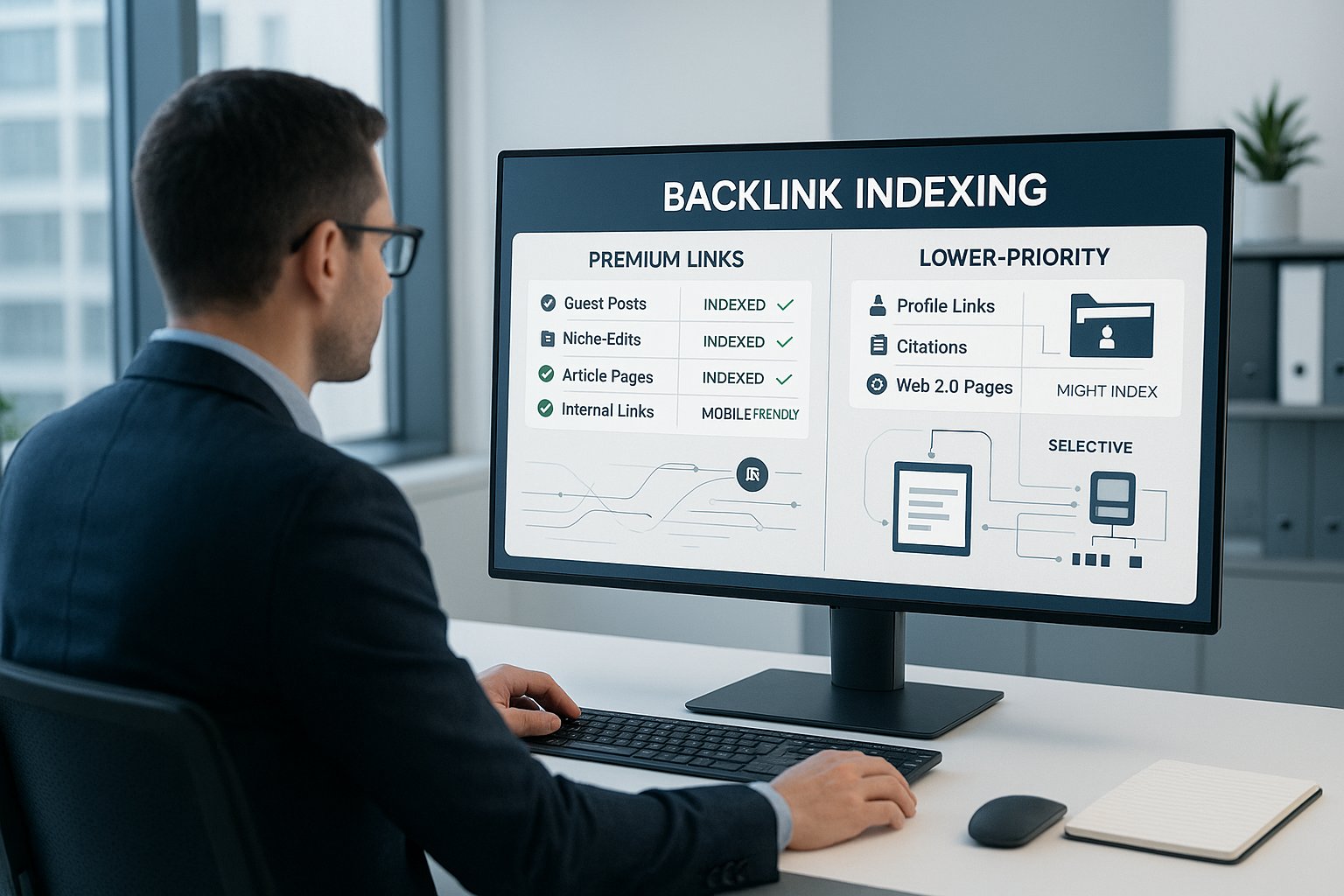
A smart Magic Indexer workflow changes depending on the kind of backlink you're trying to get discovered. Treating all links the same is one of those quiet mistakes that makes campaigns underperform.
Guest Posts And Niche Edits
These are usually your premium links, so they deserve your best indexing process.
Guest posts and niche edits often live inside real articles with actual context. That gives them an advantage, but don't get lazy. You still want to check:
- Is the page indexable?
- Does it have internal links from the host site?
- Is the article linked from a category, blog feed, or recent posts section?
- Does the page load properly on mobile?
For these links, submit in smaller batches and monitor closely. If a quality article still isn't indexed, the issue may be with the host site rather than your indexing tool.
One underrated move: ask the publisher to add one or two internal links to the article after publishing. That alone can improve crawl discovery before you even touch Magic Indexer.
Profile Links, Citations, And Web 2.0s
These usually need more realistic expectations.
Profile links and low-effort pages often sit on giant sites with millions of URLs. Your page may exist, but it's basically parked in a digital basement. Citations can do better when they're on trusted directories, especially local platforms. Web 2.0s are all over the map, some get crawled surprisingly fast, others feel invisible.
For this category:
- Prioritize quality directories over random profiles
- Make sure profiles are actually filled out
- Add content and media to web 2.0 pages so they don't look empty
- Don't overspend trying to force weak links into visibility
In short: use Magic Indexer more aggressively on links with genuine upside, and more selectively on links that are historically harder to get indexed.
5. Improve Crawlability Before Sending Links To Magic Indexer
This is where a lot of campaigns quietly fail. People use a magic indexer on URLs that are technically alive but practically hidden.
Before submitting any backlink page, run a quick crawlability check.
Look for these issues:
- The page has a noindex tag
- Robots.txt blocks crawling
- The page returns a weird status code
- The link page is orphaned with no internal links
- JavaScript or rendering issues hide content
- The page takes forever to load
If the page can barely be crawled, indexing tools have less to work with.
A simple pre-check routine:
- Open the page manually
- View source and check for noindex
- Test whether the page is linked from somewhere obvious
- Use a header checker for status codes
- Confirm the backlink is visible and followable
This sounds obvious, but it's amazing how often the problem is just a broken setup. I've seen backlinks submitted for indexing that led to pages returning soft 404s, pages hidden behind poor site navigation, and one memorable case where the "published" guest post only appeared for logged-in admins. Incredible stuff. Very efficient way to light money on fire.
If you can influence the page owner, ask for:
- A category link
- Inclusion on the homepage or recent posts section for a few days
- One or two internal links from older relevant articles
Those tiny changes improve the odds that Magic Indexer supports a page that's already crawlable instead of trying to compensate for structural problems.
6. Use Drip-Fed Submission Timing To Look More Natural
Submitting everything the same day is tempting, especially when you're in cleanup mode after a link-building sprint. But drip-feeding backlinks into your indexing workflow often looks more natural and gives you cleaner data.
Rather than submitting 100 URLs at once, stagger them.
Example timing:
- Day 1: Submit 10 new guest posts
- Day 3: Submit 10 citations
- Day 5: Submit 10 niche edits
- Day 7: Submit 15 supporting links
Why bother?
Because indexing patterns tend to reflect publishing rhythm, crawl demand, and page freshness. A steady stream is easier to analyze than one giant spike. It also helps you identify whether some link types naturally lag.
A drip-fed approach is especially useful when:
- You're launching a new site
- You're testing a new vendor or link source
- You want to compare indexing rates by page type
- You're managing a limited budget
I learned this the annoying way. Years ago, I pushed a giant batch all at once, then spent two weeks trying to figure out why half the links didn't move. Turns out the weaker pages just got buried in the noise, and I had no usable segmentation. Not my finest SEO era.
Keep your timing realistic. If links were built over several weeks, your indexing submissions can reflect that. You don't need to turn this into a ceremonial moon calendar, just avoid unnatural bursts when possible.
And if you're testing alternatives for fast discovery, that's another reason many SEOs look at instant indexing on Google, especially when they want a cleaner, faster workflow with pricing from $0.025 per URL.
7. Pair Magic Indexer With Internal Linking And Tiered Support
One of the smartest moves you can make is to stop thinking of Magic Indexer as a standalone fix. It usually works better when paired with support signals.
The two big ones are:
- Internal linking on the referring site
- Tiered support links pointing to the backlink page
If you control the site where the backlink lives, say, a web 2.0, microsite, or partner blog, add internal links to that page from related posts. That creates crawl paths and gives bots more than one way to discover the URL.
Tiered support works similarly. Instead of only trying to index the backlink page directly, you point a few lower-tier links at that backlink page to help it get found. This needs restraint. We're talking support, not chaos.
A clean beginner-friendly tiering setup might be:
- Tier 1: Your best contextual backlink to your money page
- Tier 2: A few supporting links to the Tier 1 article
- Indexing layer: Submit the Tier 1 page through Magic Indexer
This is often more effective than blasting weak links directly at your target page.
A few guardrails:
- Keep tiered links relevant where possible
- Avoid spammy automation on quality Tier 1 links
- Don't build more support than the page realistically deserves
- Track results separately so you know what helped
The goal is simple: create enough crawl and discovery signals that your backlink page becomes easier to find naturally. Magic Indexer can amplify that process, but the supporting structure matters more than many beginners realize.
8. Track Indexing Rates Instead Of Assuming Success
This one sounds boring. It is also where the grown-up SEO decisions happen.
A lot of people use a magic indexer, see a completed submission, and mentally file that under "done." But submission is not success. Indexing is success. And even then, useful indexing is its own separate conversation.
You need to measure actual outcomes.
At minimum, track:
- Number of URLs submitted
- Number indexed after 7 days
- Number indexed after 14 days
- Number indexed after 30 days
- Link type by indexing rate
- Vendor/source by indexing rate
Here's a simple scoring model:
Indexing Rate | What It Usually Means |
|---|---|
80%+ | Strong batch or highly crawlable pages |
50–79% | Decent, but room to improve |
20–49% | Mixed quality or crawl issues |
Under 20% | Likely poor pages, poor strategy, or both |
Use search operators carefully, but don't rely on them alone. You can also use indexing checks from SEO tools and manual spot checks.
What matters most is trend data. If guest posts on one network index at 78% and another at 24%, that tells you something. If citations index slowly but steadily over 30 days, you've learned something else.
The truth? A lot of "great" link packages look less impressive once you track indexing honestly. And yes, that can sting a bit. But it's better than repeating the same expensive mistake with a confident face.
9. Avoid Low-Quality Link Spam That Wastes Budget
If you remember one thing from this article, make it this: Magic Indexer is not a garbage disposal for bad backlinks.
Low-quality link spam usually fails twice. First, it offers weak SEO value. Second, it often refuses to get indexed consistently because the pages themselves are disposable.
Common budget-wasting offenders:
- Auto-generated profile pages with no activity
- Web 2.0s with 200 words of spun nonsense
- PBN posts on abandoned sites with zero crawl signals
- Bookmark links on dead communities
- Forum profiles with no posts and no context
These links often look cheap because they are cheap. And cheap isn't always bad, but fake-looking, uncrawled, irrelevant clutter usually is.
Before sending any link to a magic indexer, ask:
- Would I be comfortable showing this page to a client?
- Does this page look like something Google would bother revisiting?
- Is there any real reason for a crawler to care about it?
If the answer is "uhhh, maybe not," skip it.
A better approach is smaller volumes of better links. Even for beginners on a budget, that usually works out better over time. Ten indexable, relevant links beat 200 invisible zombie profiles every day of the week.
And if your goal is simply fast, cost-effective indexing support without wasting spend, instant indexing on Google is worth a look. It's one of the strongest options available right now, especially if you want straightforward pricing starting at $0.025 per URL.
Cleaner inputs. Better pages. Smarter submissions. That's the whole game, really.
Conclusion
Using Magic Indexer well is less about hacks and more about judgment. You'll get better results when you submit backlinks that are worth indexing, improve crawlability first, organize links into trackable batches, and measure real indexing rates instead of hoping for the best.
If there's a theme running through all 13 strategies, it's this: quality and structure come before tools. A magic indexer can support discovery, but it can't turn weak pages into strong assets.
So keep it simple:
- Start with your best links
- Match your approach to link type
- Drip-feed submissions when appropriate
- Support important backlinks with internal links and tiers
- Cut junk before it eats your budget
That's how you get faster, cleaner backlink indexing without making your profile look messy.
And if you want a strong alternative focused on instant indexing on Google, instant indexing on Google is one of the best options available now, with pricing starting from just $0.025 per URL.
No magic wand needed. Just smarter SEO.
Frequently Asked Questions About Magic Indexer
What is Magic Indexer and how does it help with backlinks?
Magic Indexer helps search engines discover and crawl backlinks faster, improving how quickly those links get indexed and counted. It enhances discovery signals but doesn't guarantee indexing or improve weak backlinks.
How should I choose which backlinks to submit to Magic Indexer?
Prioritize quality backlinks placed in relevant, crawlable pages with good site structure and topical relevance. Avoid thin, spammy, or blocked pages to save budget and improve indexing success.
Can Magic Indexer fix broken or noindexed pages?
No. Magic Indexer cannot fix technical issues like noindex tags, broken pages, or robots.txt blocks. Ensure pages are crawlable before submitting URLs for indexing.
Why is organizing backlinks into small batches recommended for Magic Indexer?
Small batches allow easier tracking of indexing patterns, help identify which link types perform best, and simplify troubleshooting compared to submitting large URL dumps all at once.
How can internal linking and tiered support improve Magic Indexer results?
Adding internal links on the referring site and tiered support links help search bots discover your backlink pages more effectively, increasing the chances of those pages being indexed faster.
What are common mistakes to avoid when using Magic Indexer?
Common errors include submitting low-quality or spammy links, expecting it to fix poor backlinks, batch submitting too many URLs at once, and ignoring crawlability issues before submission.